


Porsche Cayenne Electric Review: The Cayenne Reinvents Porsche Again
Porsche's most important SUV goes electric, but its greatest achievement has surprisingly little to do with speed.


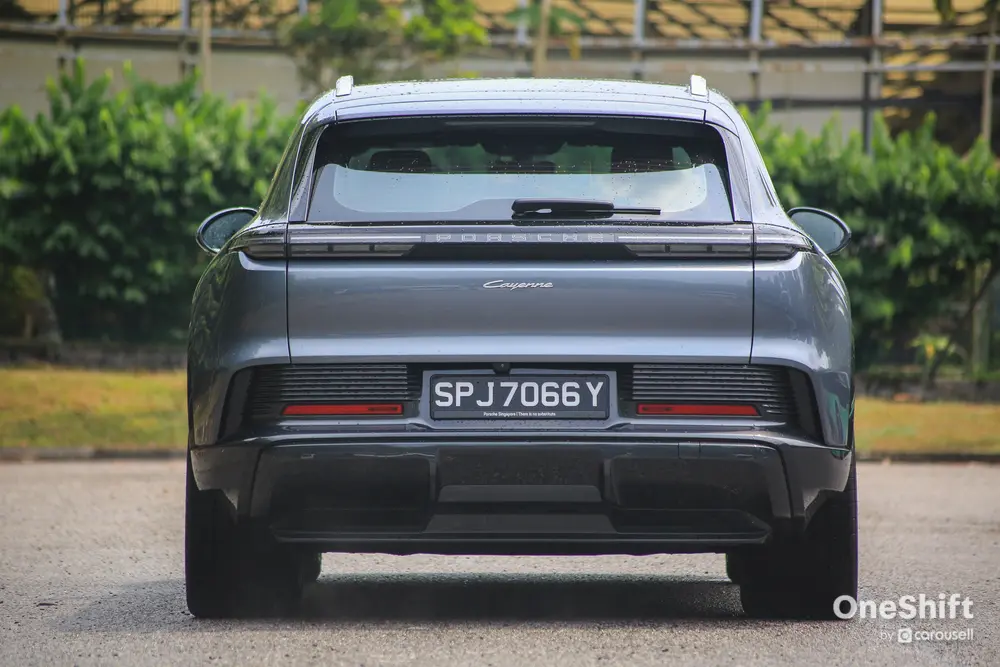
There are moments in Porsche's history when the company does something that makes the faithful slightly uncomfortable.
The water-cooled 996-generation 911 was one. Then, in 2002, Porsche did something bordering on sacrilege: It launched an SUV.
Purists complained. Some wondered whether a tall, heavy five-door had any business wearing the Porsche crest.
Well, people bought the Cayenne. Lots of them.
More importantly, it proved something: Porsche could fundamentally change the type of cars it built without necessarily changing what made them Porsches.
More than two decades later, we're here again; except this time, the controversial bit isn't that the Cayenne is an SUV.
It's that there is no engine.
After spending time with the new Cayenne Electric, I'm going to put this out there early: This is, personally, the best large electric SUV yours truly has driven this year.
Not because it has the biggest screen; and, certainly, not because it's outrageously quick.
It isn't.
What makes this Cayenne special is how Porsche has tackled some of the less glamorous problems associated with large EVs - weight, charging, range, ride quality and driver involvement - rather than simply burying them beneath horsepower.
Technically Speaking
The Cayenne Electric has been engineered as an EV from the beginning. Underneath is a substantial 113 kWh battery, an 800-volt electrical architecture and two permanent-magnet synchronous motors providing all-wheel drive.
Our market’s Cayenne Electric produces 300 kW, or 402 bhp, and 835 Nm. Activate Launch Control and output temporarily rises to 325 kW, or 436 hp. Zero to 100 km/h takes 4.8 seconds, while top speed is 230 km/h.
Fast, you say? Absolutely.
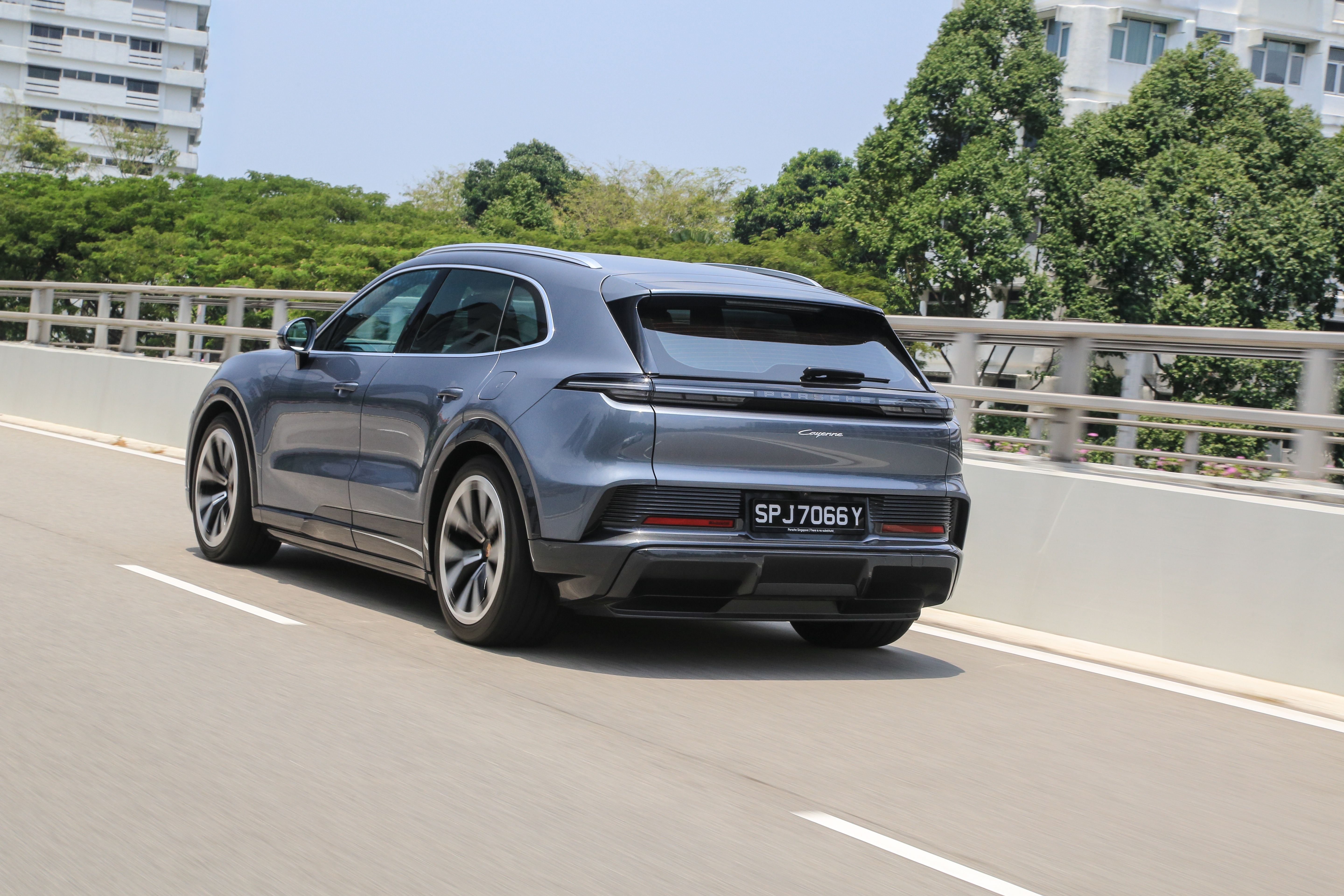
But in 2026, another powerful EV capable of reaching 100 km/h in under five seconds isn't particularly revolutionary anymore; the interesting engineering lies elsewhere.
Under lighter loads, for example, the front electric motor can be decoupled to reduce drag losses and improve efficiency. The Cayenne also uses double-sided battery cooling, while its 800-volt architecture allows charging speeds that remain exceptional even by today's standards.
In other words, Porsche hasn't simply concentrated on making its big electric SUV fast - it has concentrated on making an inherently inefficient type of vehicle rather less inefficient.
Size Matters
There is, however, no engineering your way around its dimensions.
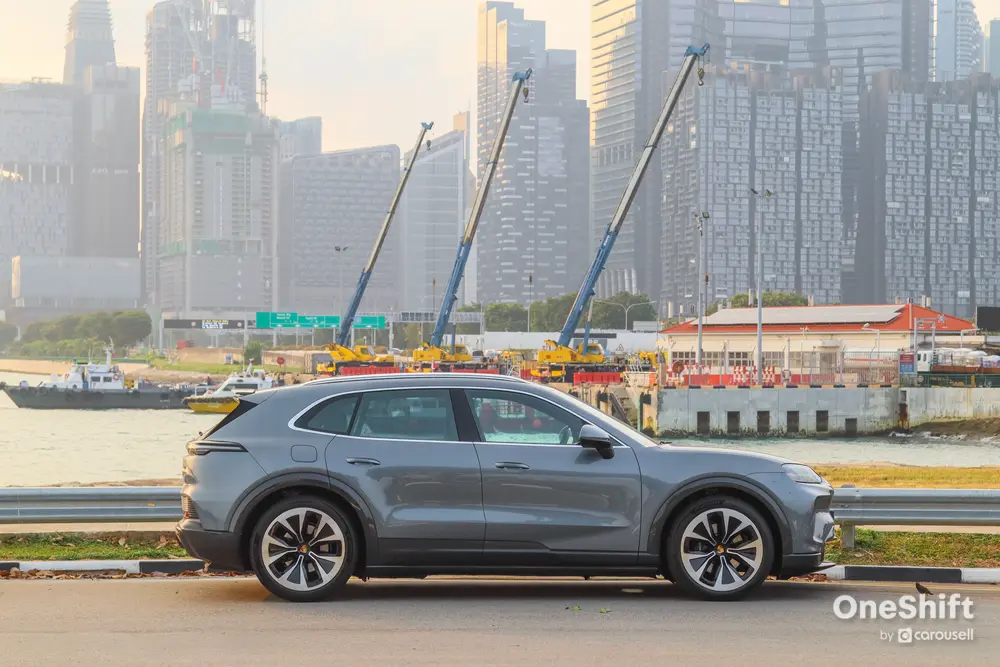
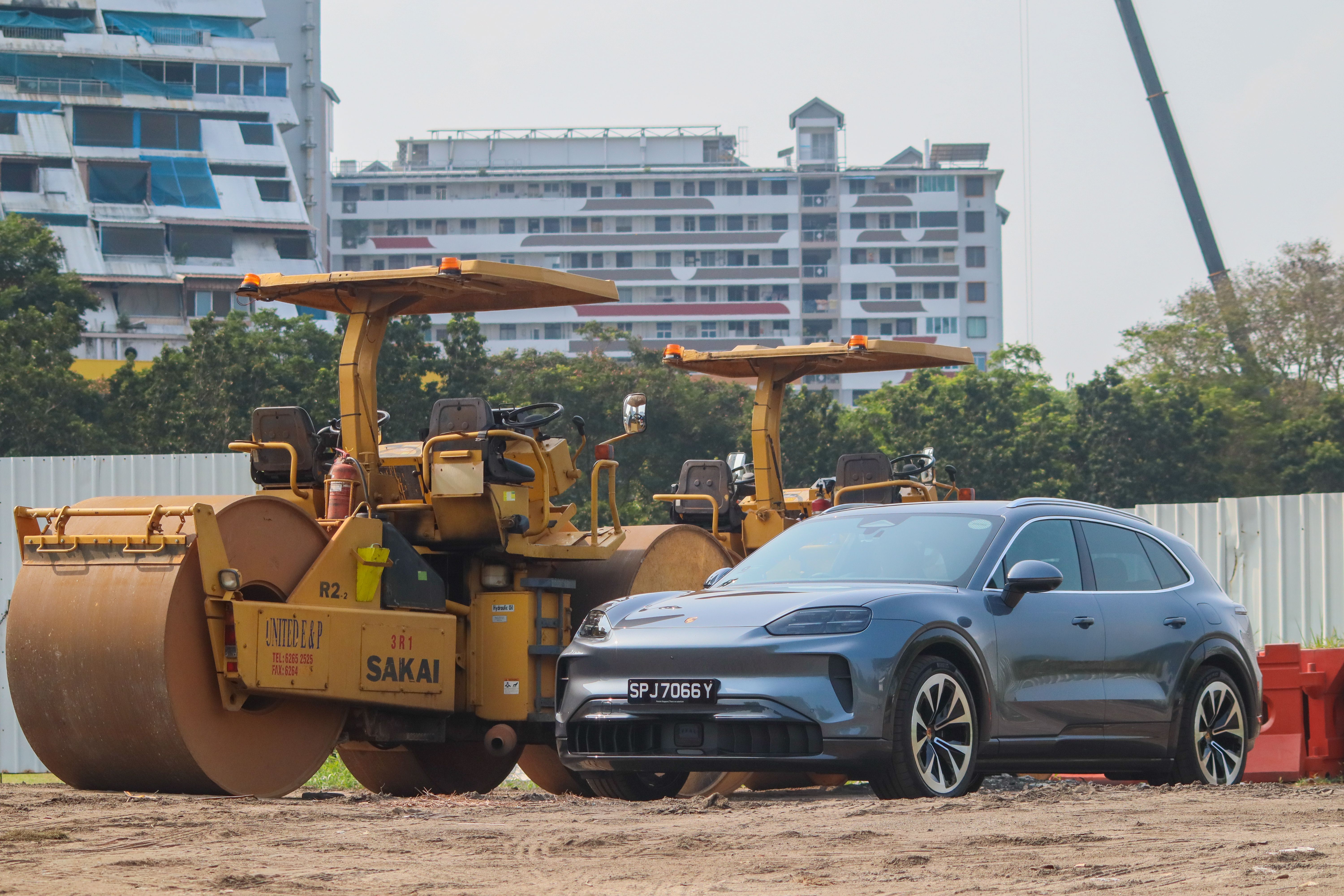
At 4,985 mm long, 1,980 mm wide and 1,674 mm tall, sitting on a 3,023 mm wheelbase, this is a very large car. Oh, it also weighs 2,525 kg.
And in Singapore, you'll notice: Older multi-storey car parks with ramps designed at a time when a Toyota Corolla constituted a large family vehicle will make you appreciate its all-around cameras rather quickly.
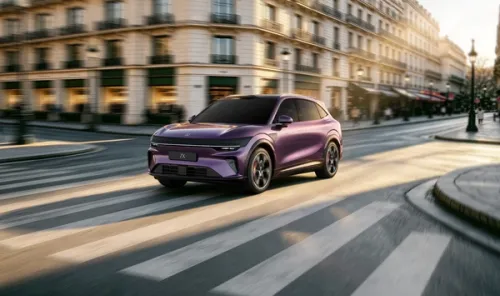
But visually, Porsche has disguised the bulk rather well.
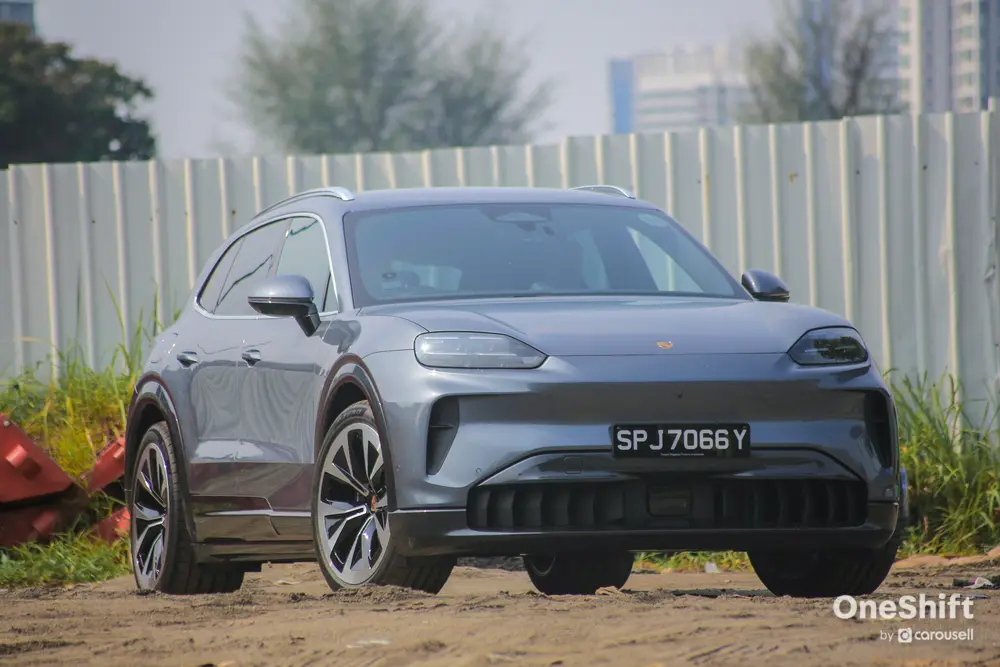
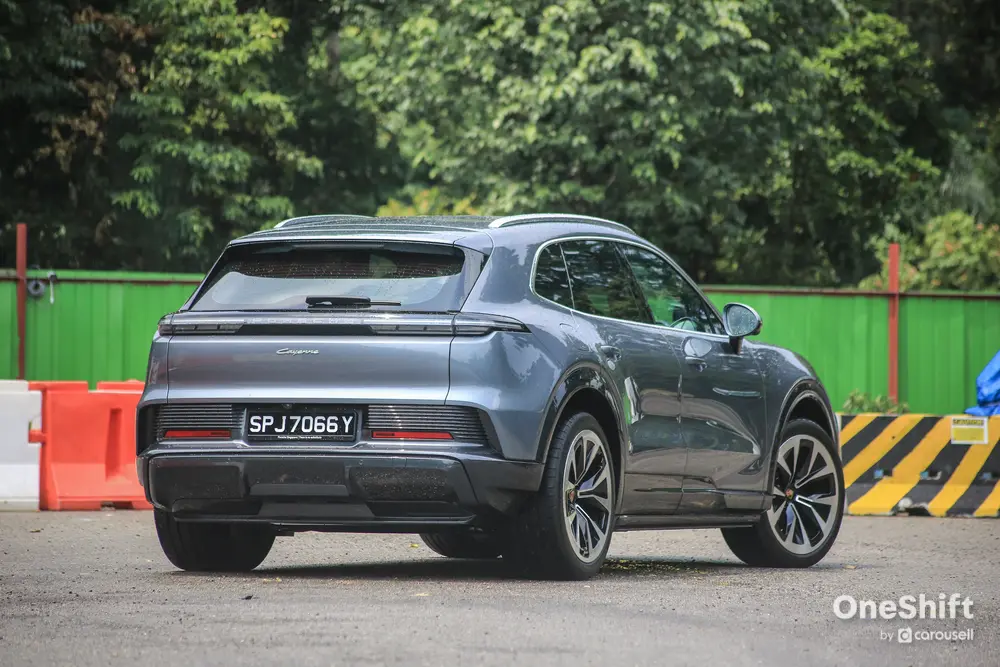
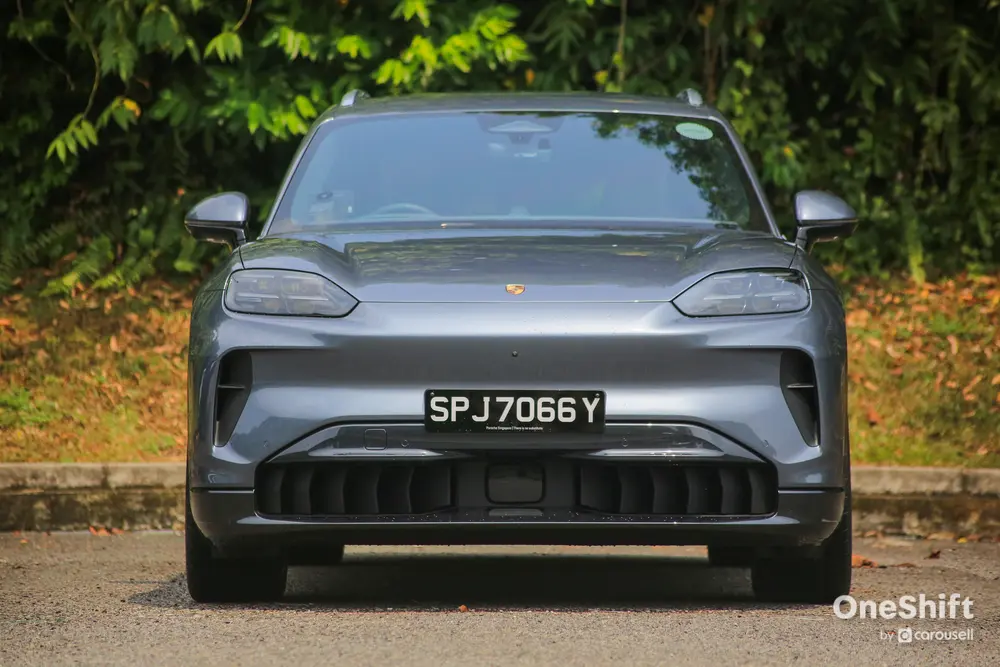
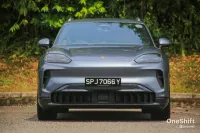
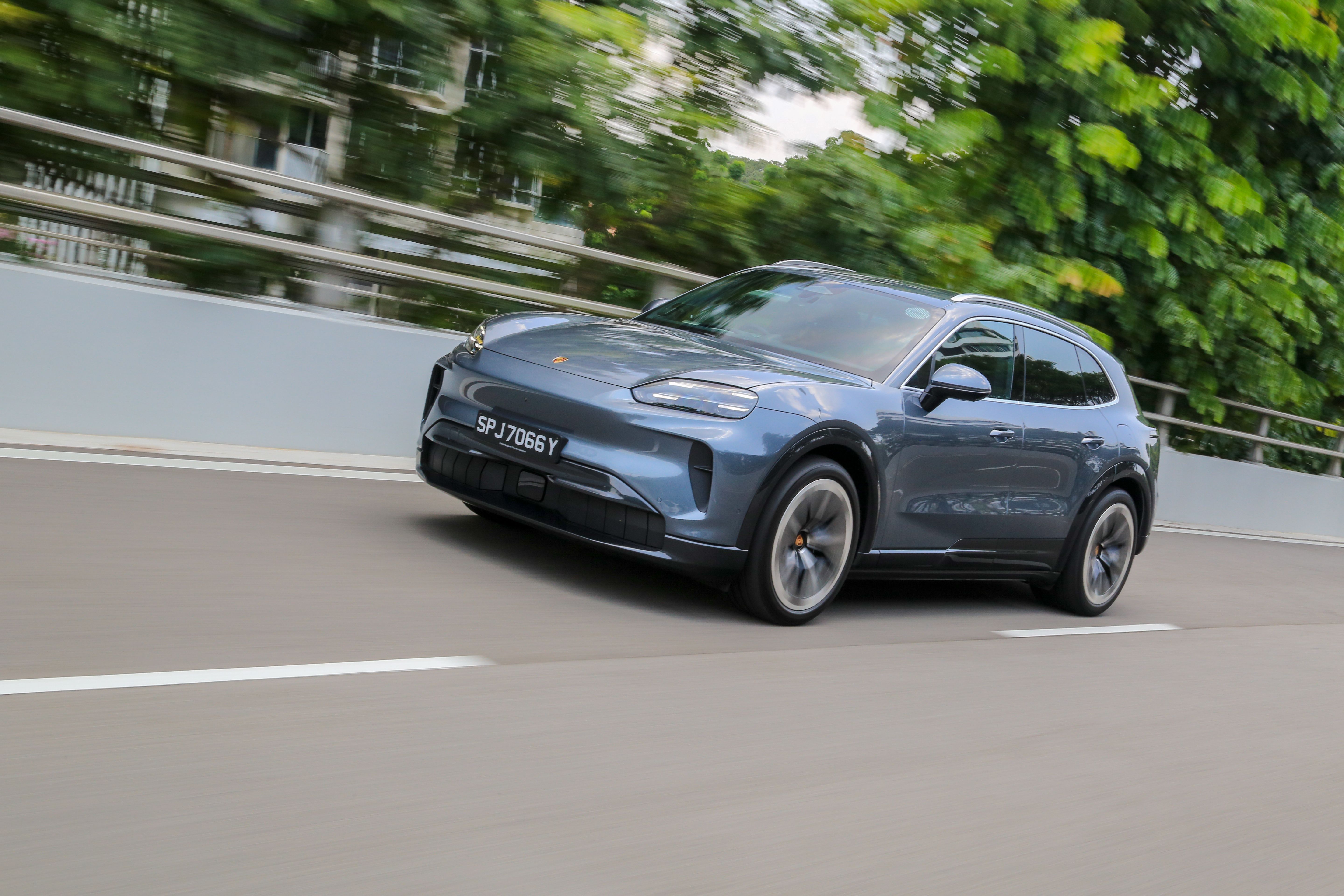
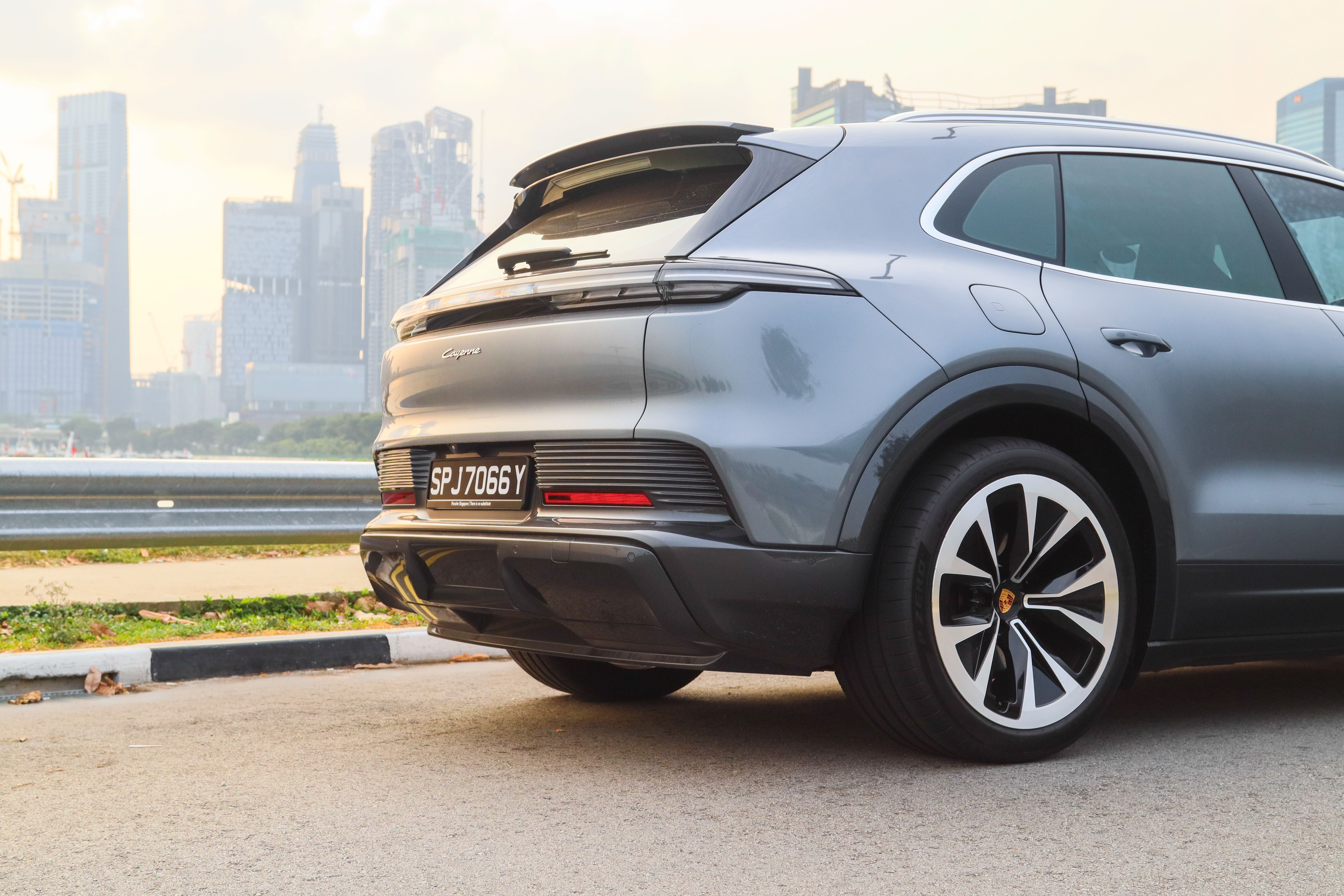
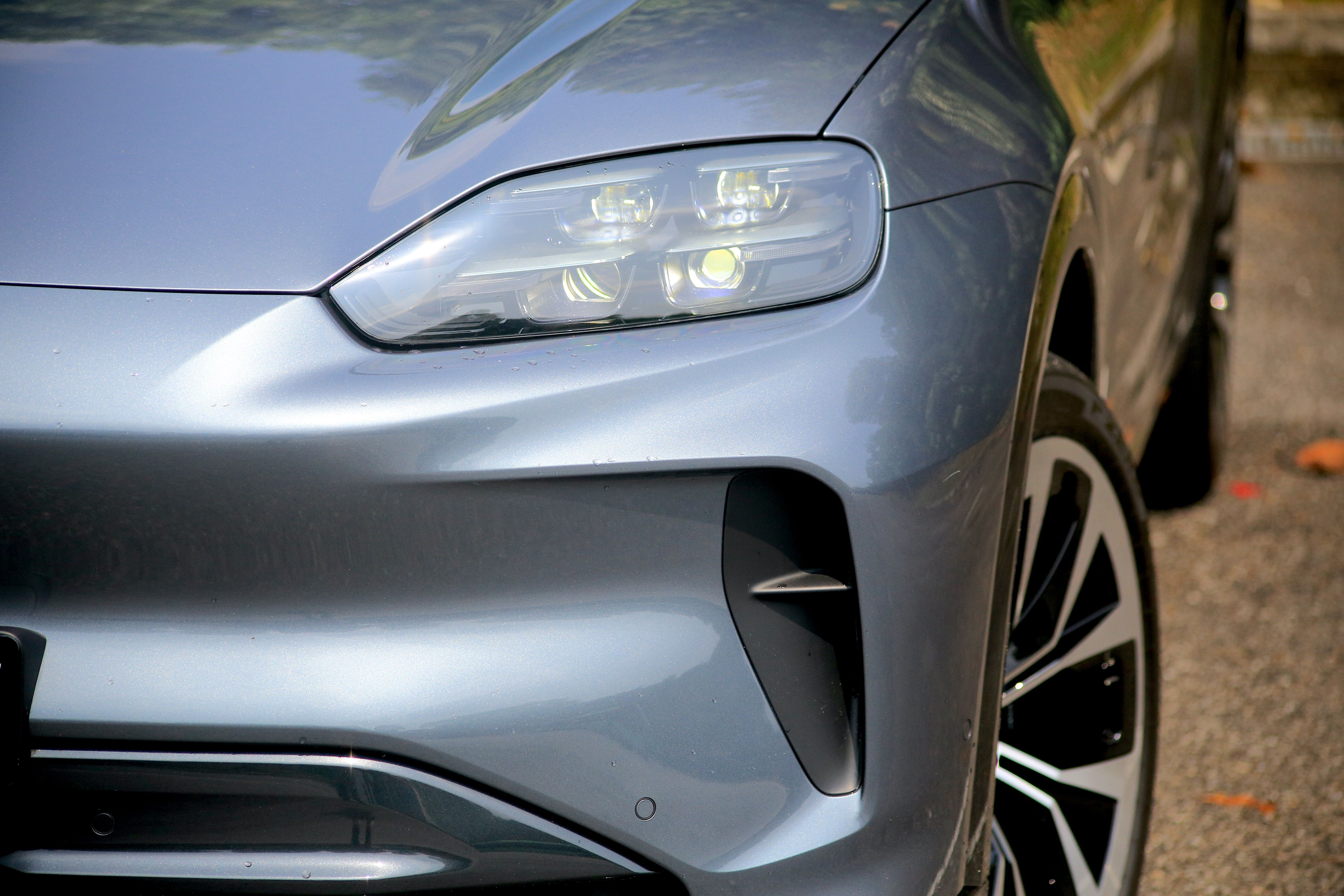
The cleaner nose and slim lighting make this Porsche look distinctly more contemporary, while the familiar Cayenne haunches prevent it from becoming another anonymous EV blob.
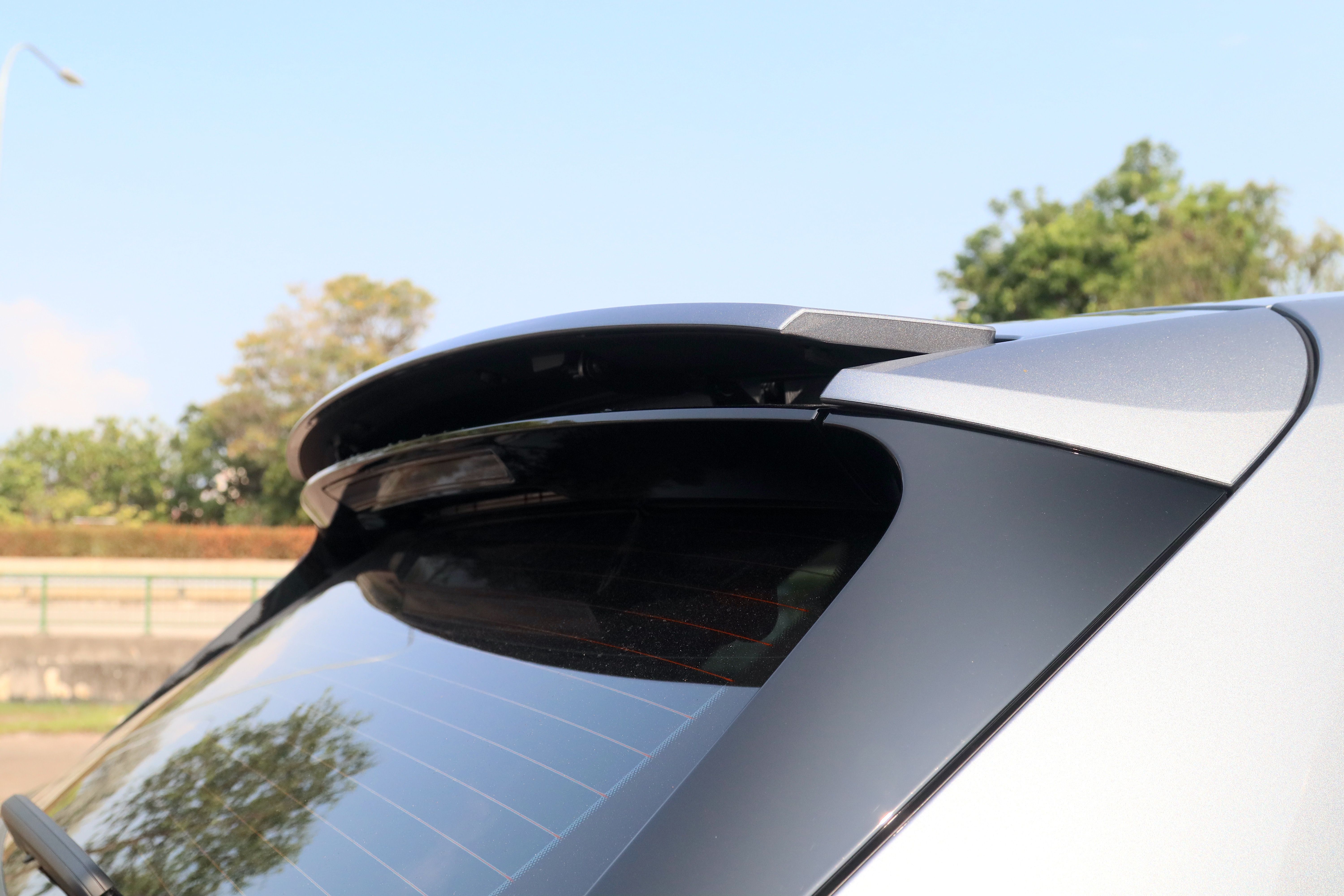
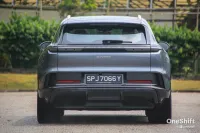
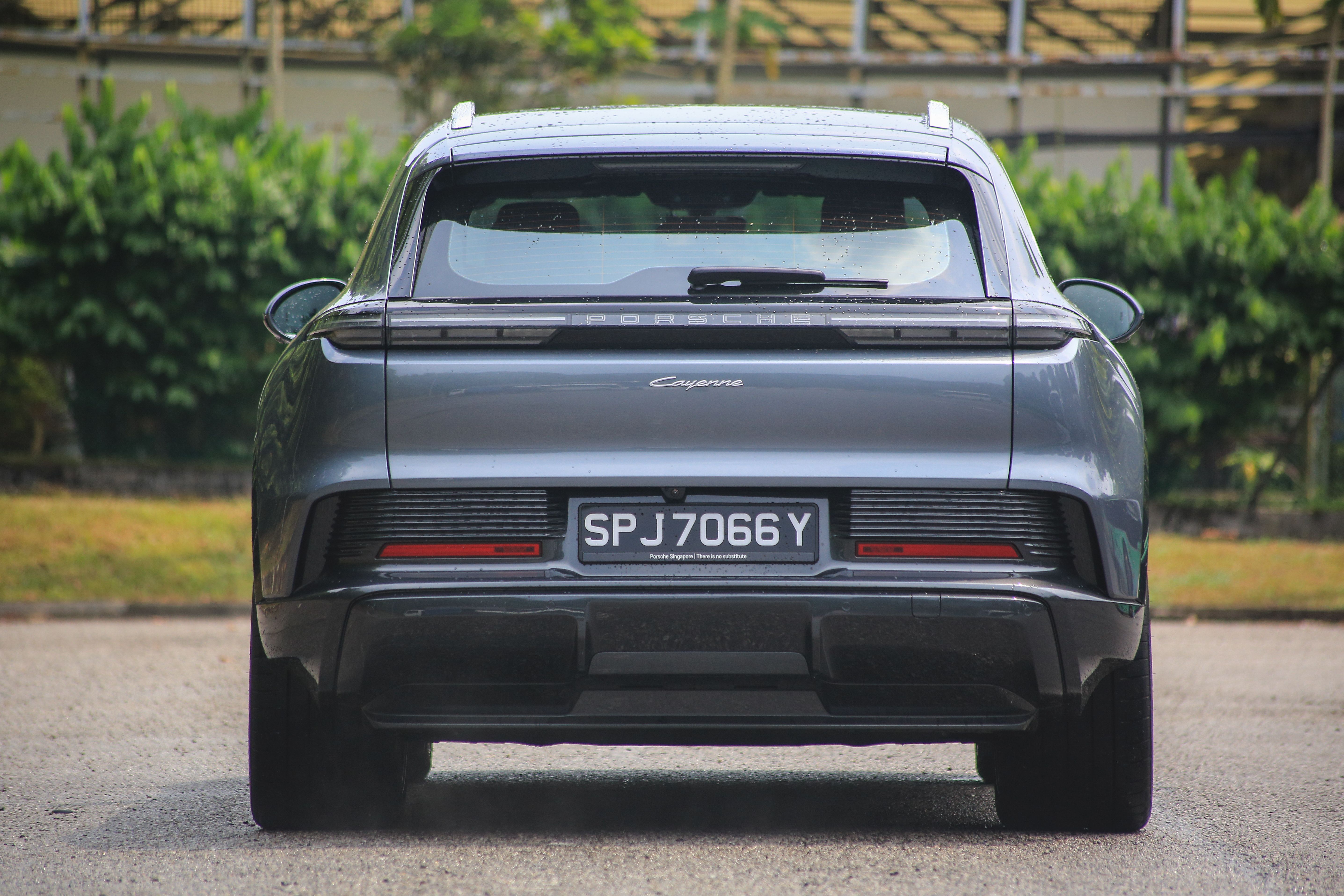
(The active rear spoiler retracts to reduce drag and improve efficiency, then automatically rises at higher speeds for greater stability and downforce.)
More interesting is what you can't immediately see - its drag coefficient can be as low as 0.25, impressive for something this large. Active aerodynamic elements help manage airflow, because when you're pushing almost two metres of SUV through the atmosphere, reducing drag is considerably more intelligent than simply installing an even larger battery.
There's a refreshing lack of visual theatre too; it doesn't shout about being electric. Instead, it just looks like the Cayenne has moved on.
The Number Games
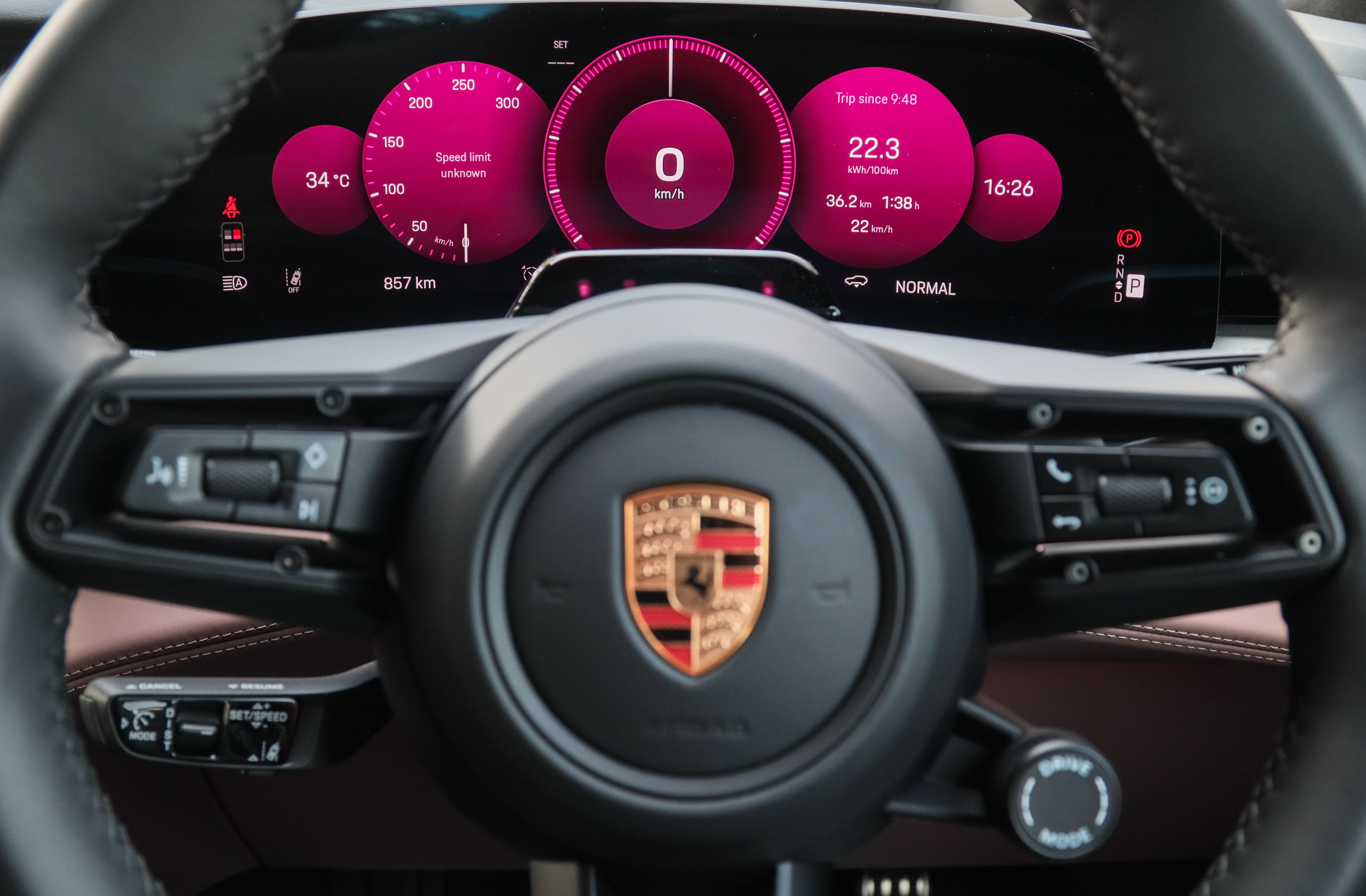
For me, the headline number isn't 4.8 - it's 542, the Cayenne Electric's official WLTP range.
Range remains particularly relevant with large EVs because weight and aerodynamic drag don't disappear simply because your car is expensive.
With 542 km available on paper, however, the Cayenne becomes remarkably easy to comprehend in Singapore.
Even allowing for air-conditioning, traffic and the inevitable difference between WLTP testing and real-world driving, most local owners shouldn't need to structure their lives around charging it.
Even heading north into Kuala Lumpur becomes entirely realistic without turning the journey into a strategic exercise involving twenty charging apps, Google Maps and an Excel spreadsheet…
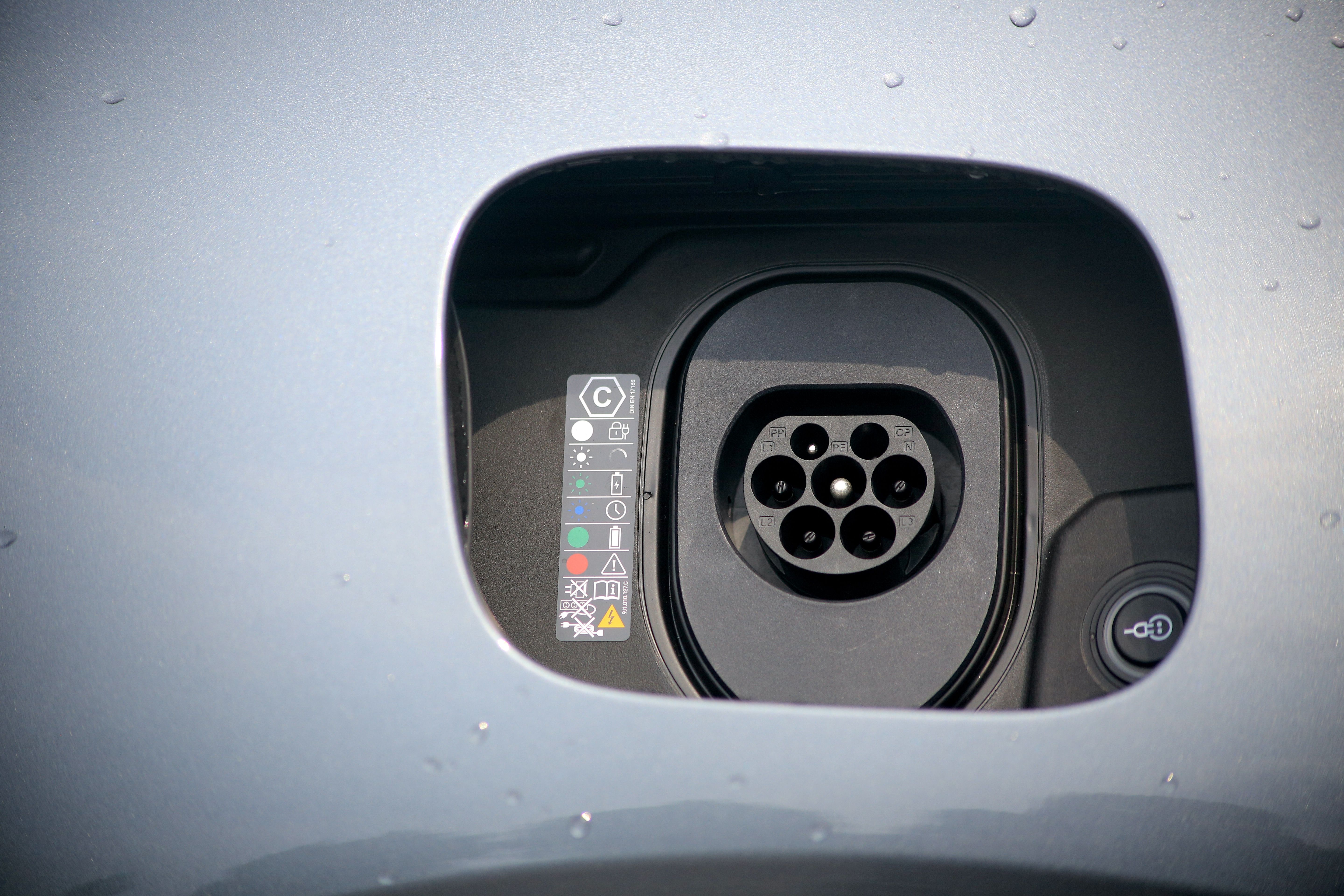
Then there's the charging itself. The 800-volt system accepts up to 390 kW DC, allowing 10 to 80 per cent in as little as 16 minutes, under ideal conditions.
There is a caveat though: Finding infrastructure in Singapore capable of consistently giving you anything close to 390 kW is another matter. So treat 16 minutes as evidence of what the hardware can do rather than what every charging stop will look like.
This also gives the Cayenne considerable future-proofing as charging networks improve.
And there's something else rather unusual: Porsche has developed optional inductive charging.
Park over the appropriate floor plate and the Cayenne can charge wirelessly at up to 11 kW, without plugging in a cable.
Is it essential? No.
But unlike another animated lighting sequence or AI-generated screensaver, it is technology that could actually make owning an EV easier.
The Inside Story
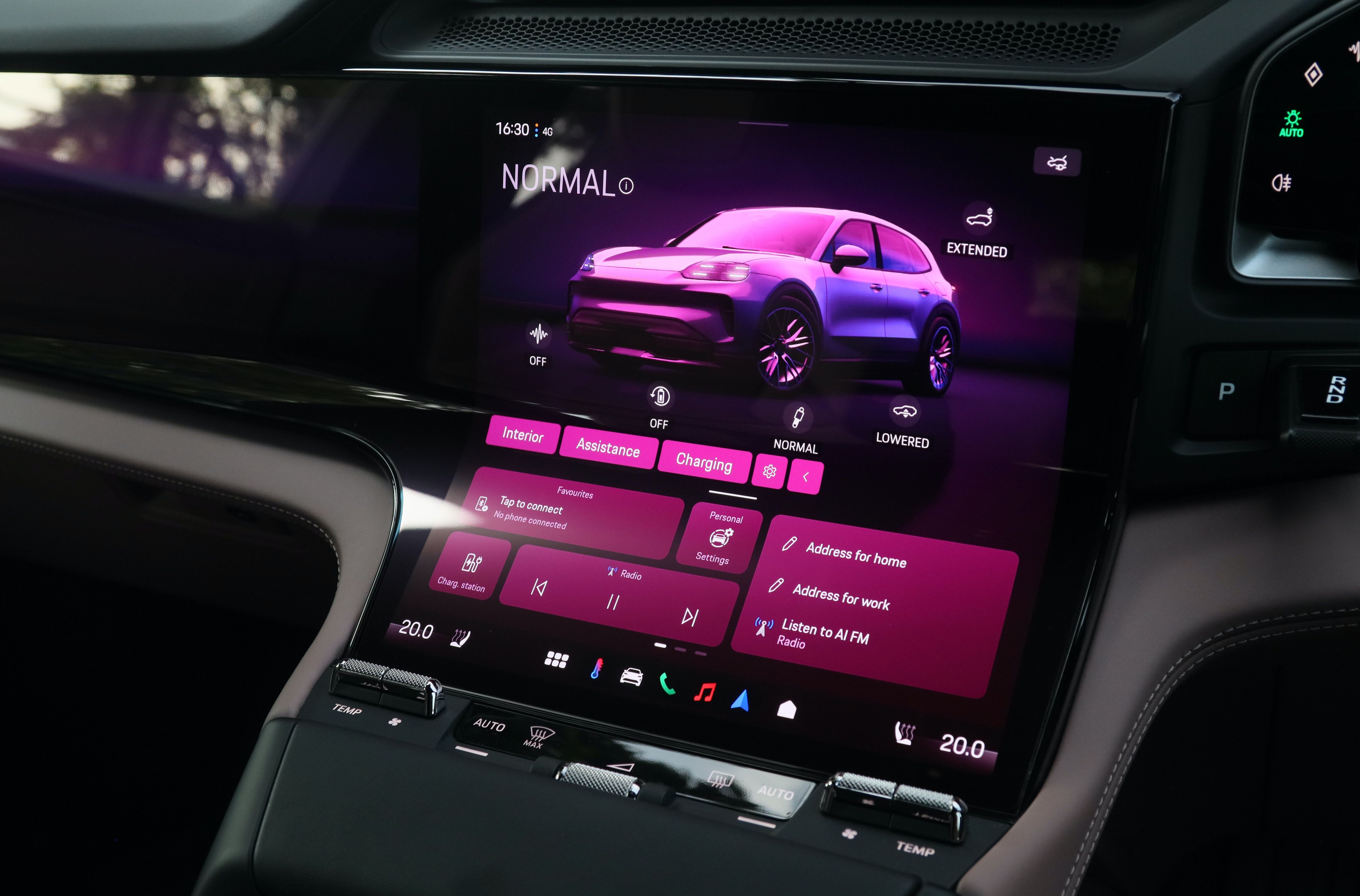
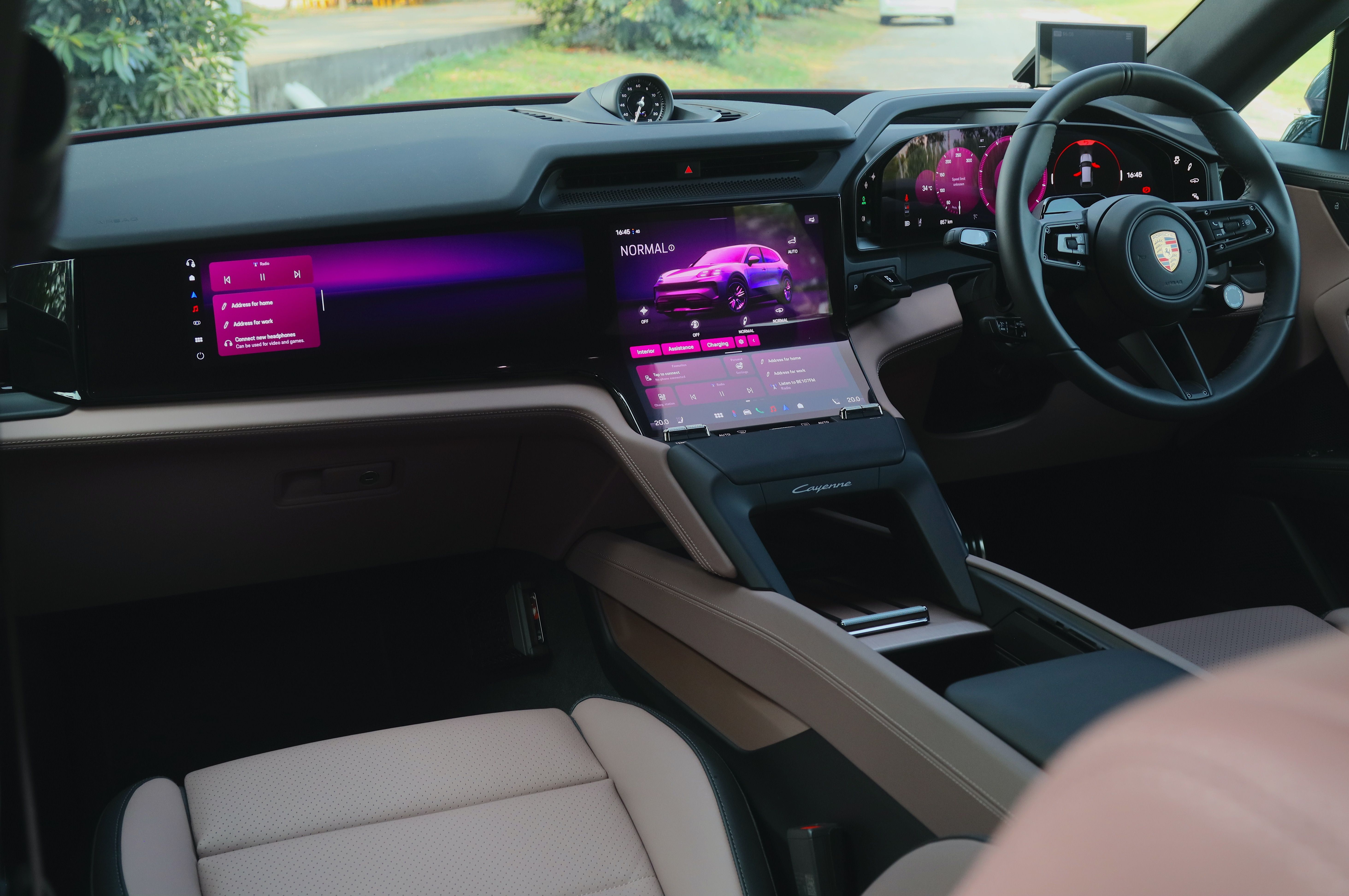
Open the door and you immediately know this isn't simply another derivative of the existing car - the centrepiece is Porsche's Flow Display, a curved OLED panel sweeping downwards into the centre console.
Ahead sits a 14.25-inch OLED instrument display, while an optional 14.9-inch passenger screen can extend the digital landscape almost completely across the dashboard.
Well, screens aren't inherently impressive anymore; what is impressive is how they're integrated.
The Flow Display follows the architecture of the cabin, instead of looking like someone finished designing the dashboard before remembering several televisions needed somewhere to live.
Making it probably the most radical Cayenne cabin yet - contemporary, distinctive and unlike anything Porsche has previously put into its large SUV.
Thankfully, physical controls haven't completely disappeared. Frequently used climate functions remain accessible without digging through menus, because changing the cabin temperature shouldn't require the concentration akin to completing an online banking transaction at 90 km/h…
And beneath all that technology, the fundamentals are sound.
The driving position is excellent, materials feel substantial and switchgear operates with proper tactility. Close a door and there's reassuring solidity behind it.
True, some rivals can now match or even exceed the Cayenne for visual extravagance - but fewer match the feeling that everything has been engineered to survive years of actual use.
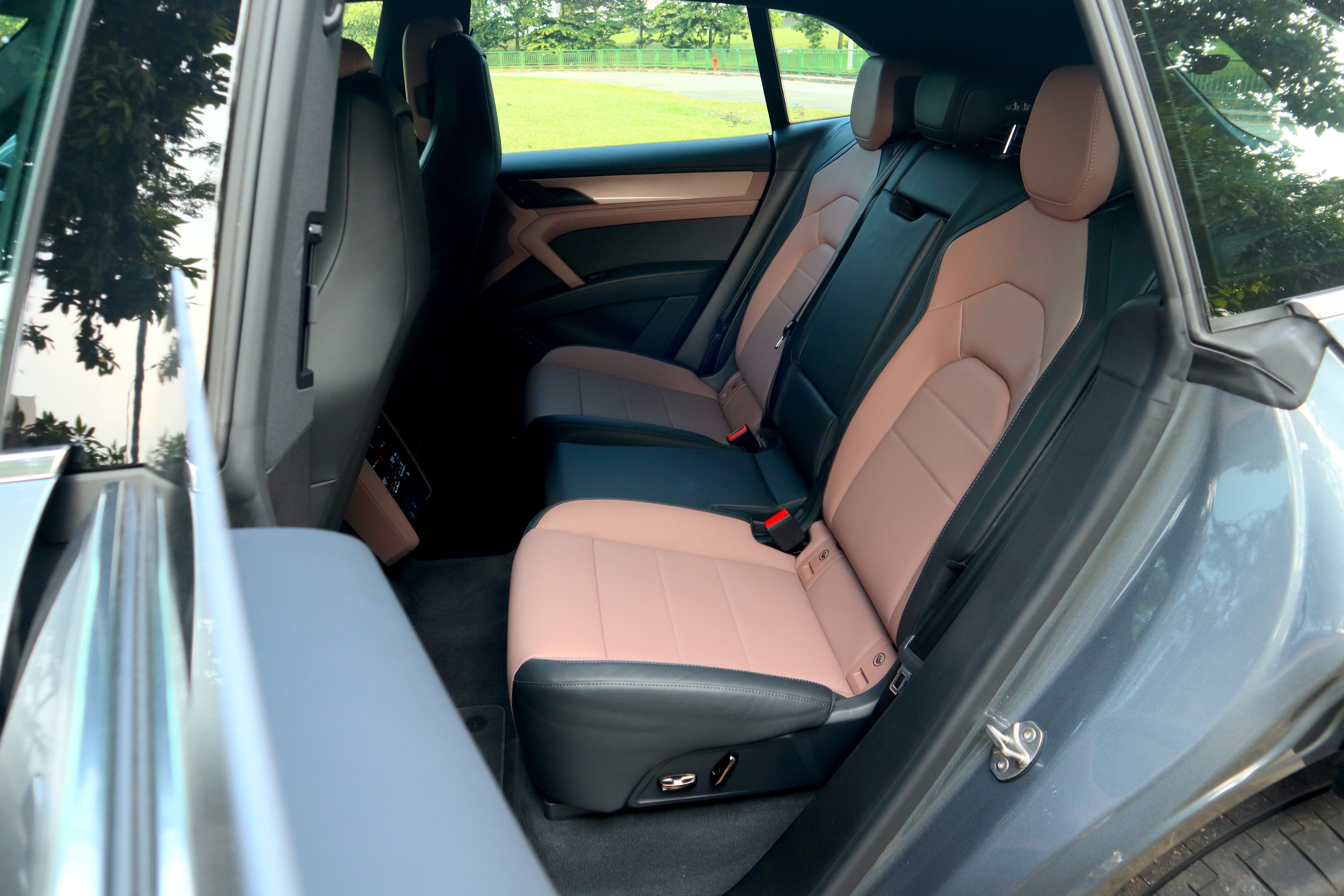
The 3,023 mm wheelbase pays dividends behind the driver. Compared with the combustion-engined Cayenne, the Electric's wheelbase has grown substantially, and rear passengers are among the biggest beneficiaries.
There's genuinely generous legroom, while electrically adjustable rear seats allow you to prioritise passenger comfort or luggage capacity.
Behind them is a 781-litre boot, expanding to 1,588-litres with the rear seats folded.
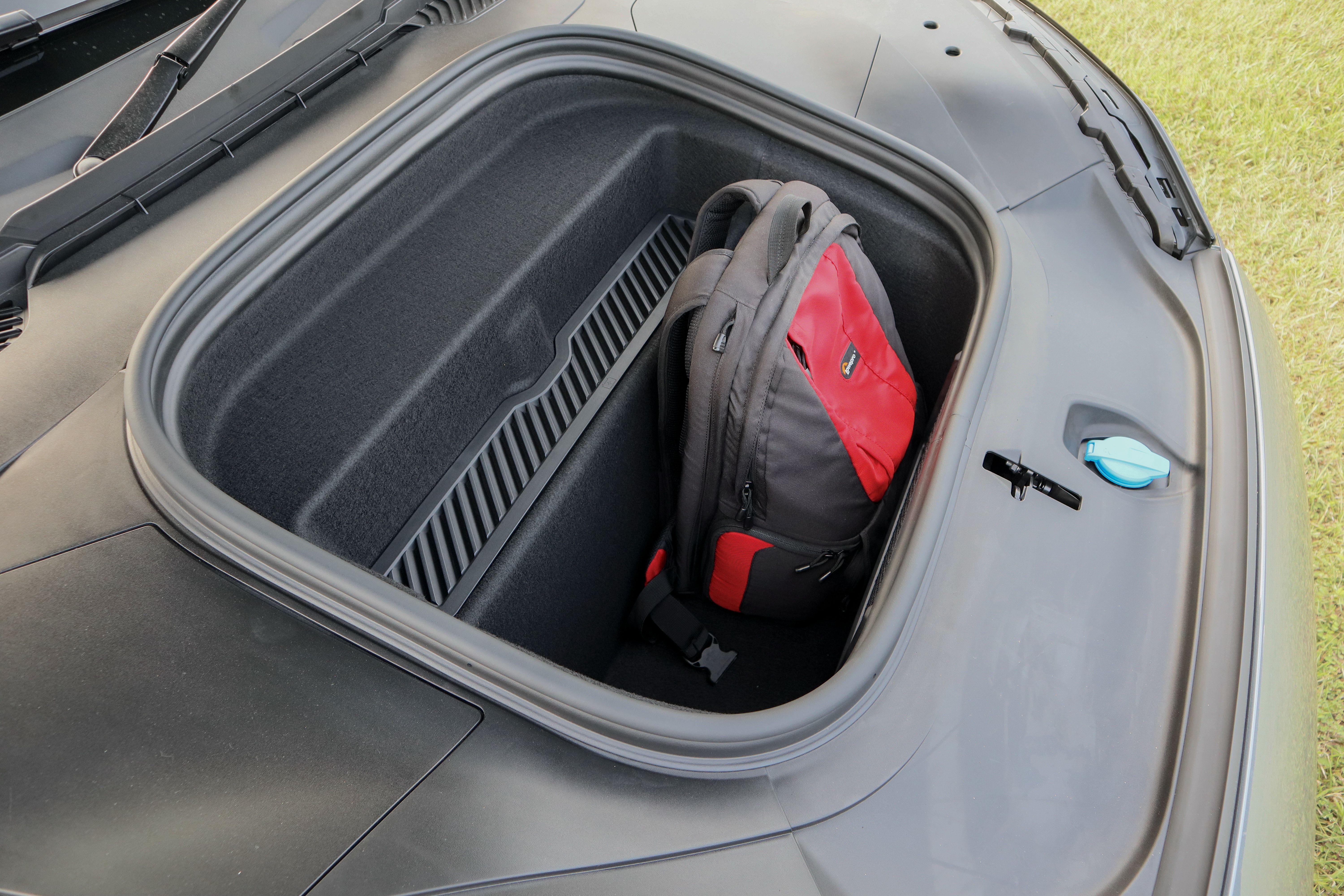
There's also a useful 90-litre front luggage compartment. And I truly mean useful; not one of those token EV frunks capable of carrying a charging cable, two polishing cloths and perhaps a small chicken.
For Singapore family life, the Cayenne Electric therefore works precisely as a Cayenne should: Airport runs, golf bags, children's gear and long journeys north shouldn't require a game of Tetris.
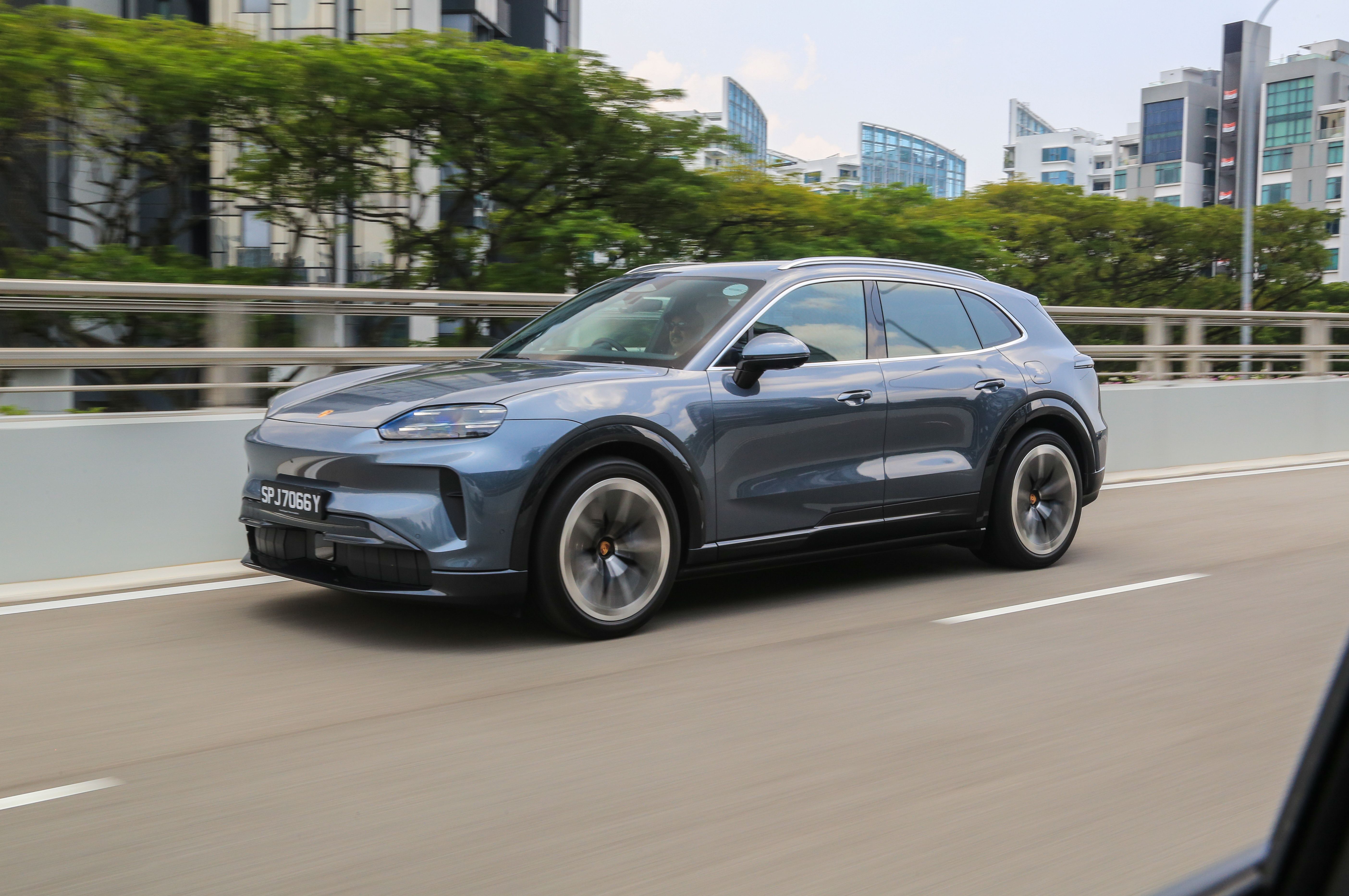
Driving It
Here's where things become slightly ridiculous.
Because you know it weighs 2,525 kg; physics knows too. Yet after several corners, your derrière starts questioning the specification sheet; the Cayenne doesn't magically feel like a 911 - let's not get carried away - but it disguises its mass exceptionally well.
The steering is key - it's accurate without being artificially hyperactive, with weighting that allows you to understand what the front axle is doing.
Turn in and the body settles quickly. Add power, and the Cayenne feels remarkably composed rather than simply hanging on while electronic systems desperately redistribute torque.
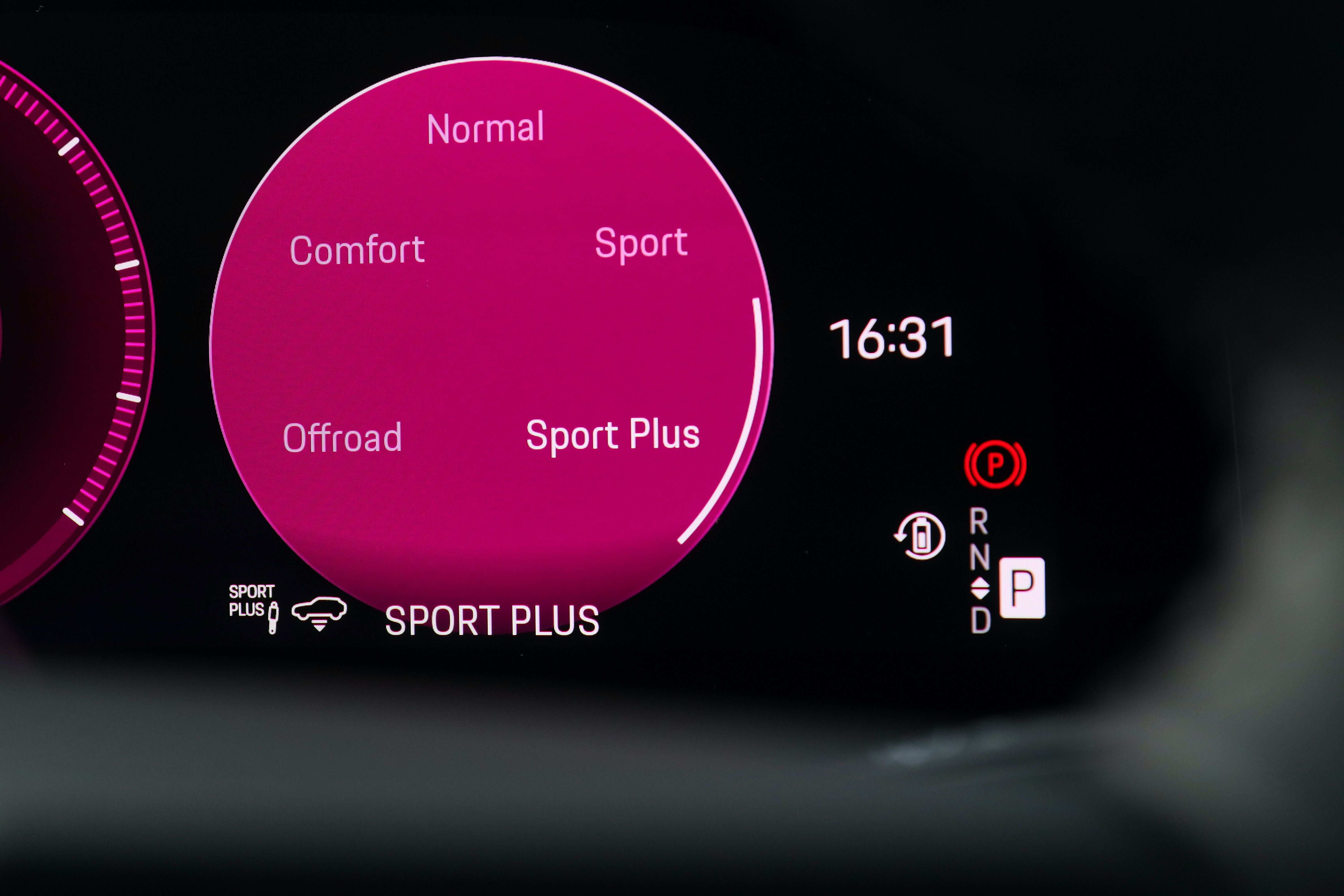
Its adaptive air suspension with Porsche Active Suspension Management deserves much of the credit: There's proper body control without the unpleasant brittleness that sometimes results when engineers try to make a 2.5-tonne EV pretend it's a sports car.
So yes, the Cayenne doesn't pretend - it simply manages its mass extremely well. Which is what's more impressive.
The throttle calibration is much more interesting: Those 835 Nm are delivered progressively, allowing you to meter out performance, rather than receiving everything just because you sneezed and your right foot accidentally moved half an inch.
Around Singapore, that makes the Cayenne beautifully smooth.
Find an empty slip road and there's still enormous acceleration waiting underneath. Frankly, what keeps you interested isn't straight-line speed; it's that the chassis actually communicates.
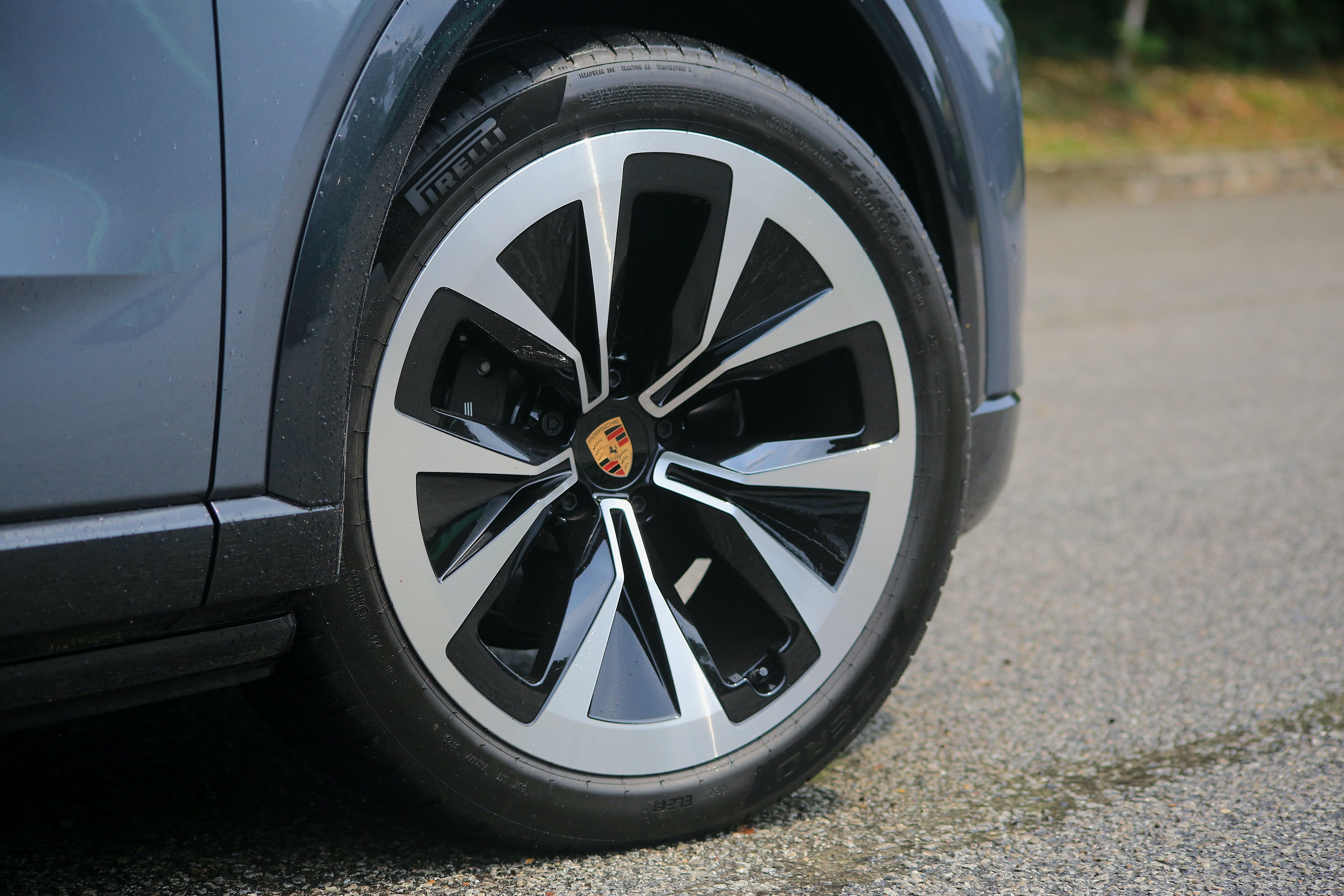
(The Cayenne Electric here gets staggered 22-inch wheels wrapped in 275/40 R22 front and 315/35 R22 rear Pirelli PZero Elect tyres.)
And the braking deserves mention too. From behind the wheel, the brake pedal feels natural. Because car guys notice these things…
Speaking of, Porsche hasn't built the driving experience around aggressive one-pedal operation. The Cayenne can coast naturally, with regenerative braking integrated through the brake pedal.
Maximum recuperation can reach an extraordinary 600 kW - that's the other impressive technical number.
The other surprise is comfort. Expansion joints, patched tarmac and apparently permanent roadworks usually expose an overly aggressive suspension setup quickly enough.
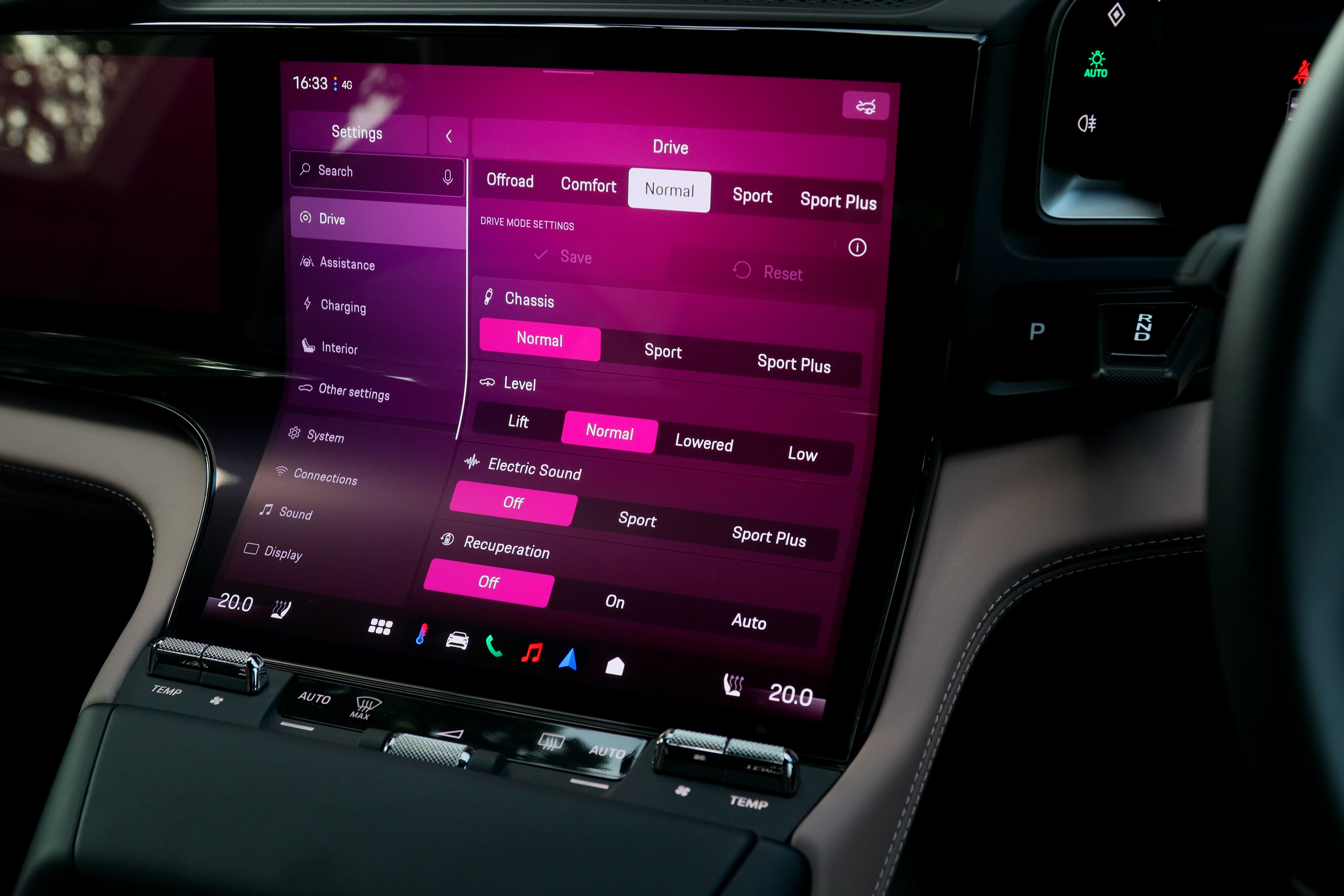
The Cayenne, though, rounds off sharp imperfections without allowing the body to float afterwards - this, in the default Normal mode.
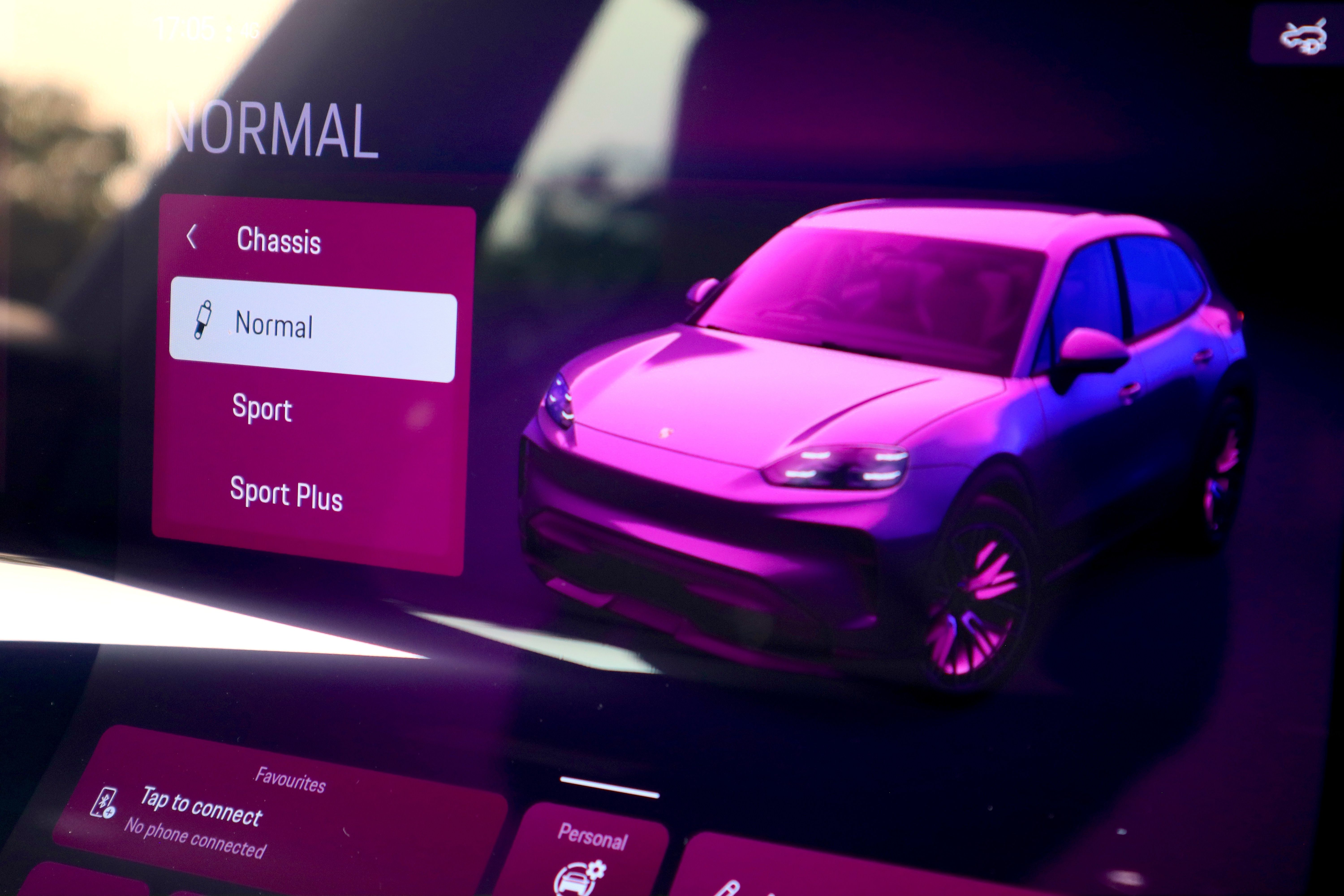
At expressway speeds, it settles beautifully. Wind and road noise are impressively controlled too, particularly important in an EV where there's no combustion engine masking everything else.
And that may be the Cayenne Electric's greatest dynamic achievement. It doesn't chase handling at the expense of comfort, or comfort at the expense of communication.
It does both remarkably well.
In A Nutshell
Now here's the uncomfortable question: The Cayenne Electric currently starts from S$372,788 before COE. Mind you, there's also the options list.
That's serious money, particularly when several increasingly luxury EVs offer enormous performance, lavish interiors and equipment lists long enough to require scrolling, for considerably less. Those alternatives shouldn't simply be dismissed because they don't wear a Porsche crest, either.
But the Cayenne's appeal isn't easily explained by a specification sheet.
Much of what you're paying for is in the difficult-to-measure stuff: The steering calibration, damping, pedal response, body control, driving position and, crucially, the way everything works together. You won't necessarily appreciate those things while comparing numbers online; you probably will three corners later.
And that's ultimately why this is personally the best large electric SUV yours truly has driven this year.
I've driven quicker EV SUVs. Others offer more equipment for less money, while some have even more extravagant interiors. But few manage to combine comfort, practicality, technology and genuine driver involvement quite as convincingly as this.
Strip away the Flow Display, 800-volt architecture, 390 kW charging, 600 kW recuperation and all those impressive numbers, and something refreshingly simple remains: The Cayenne Electric is enjoyable to drive.
Not enjoyable for an EV. Not enjoyable considering it weighs 2.5 tonnes. Just enjoyable, period.
Twenty-four years ago, the original Cayenne proved Porsche could build an SUV without losing what made a Porsche special.
The Cayenne Electric, now, proves Porsche can change what powers it without changing why you'd want to drive one.
For a pure car guy, that is perhaps its most convincing achievement of all.
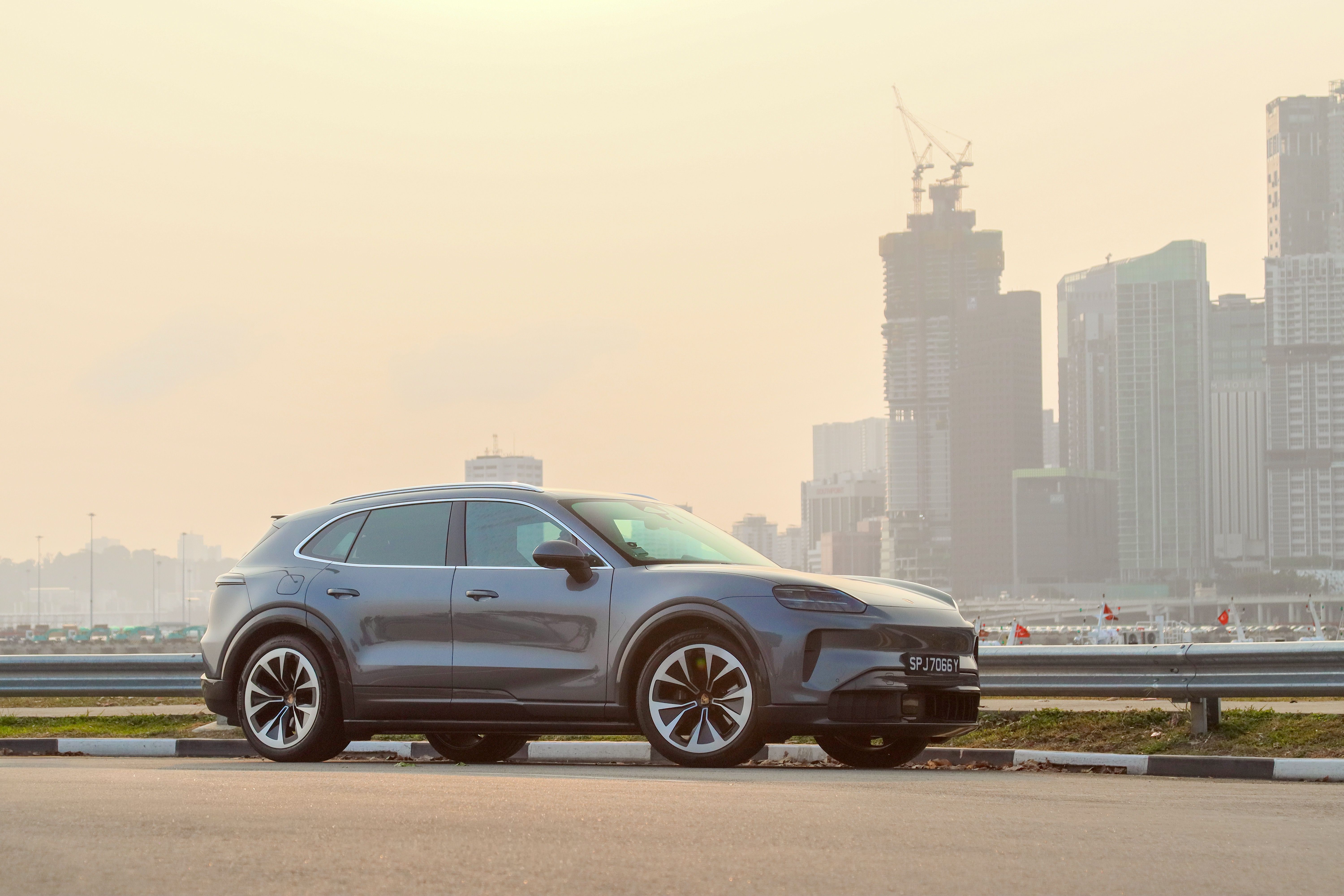
Photos by Azfar Hashim (@azfar.talks)
---
Before you buy or sell your car, Carousell first.
Carousell Autos. Singapore’s largest direct owner marketplace for everything cars and motorcycles.


Get the Best Price for your used car
from 500+ dealers in 24 hours


 Convenient and Hassle-Free
- Consumer Protection
Transparent Process
With No Obligation


