Toyota Executives Set The Scene For Delivering Fuel Cell Technology

Toyota Executives Set The Scene For Delivering Fuel Cell Technology

The next era in Toyota’s technology development is about to become production reality, with the market introduction next year of the company’s first hydrogen fuel cell-powered car. It’s a major, but logical next step for the company, as it builds on the success it has achieved with hybrid over the past 15 years. Karl Schlicht, Executive Vice President of Toyota Motor Europe, is explicit about Toyota’s commitment to hydrogen power and the potential of fuel cell vehicles to deliver on the company’s ambitions to develop the ultimate eco-car. 

OneShift Editorial Team
21 Apr 2014

He said: “Our unique hybrid history and experience have proven invaluable for the next big leap. Back in 2010, we promised our first fuel cell car for 2015 and we are fully on track to honor our commitment. Fuel cell is a technology that can secure our concept of personal mobility. That’s because fuel cells combine the strengths of EVs (electric vehicles) and hybrids, with those of conventional cars. That means zero emissions – they only emit water vapor – and full usability; refueling only takes about three minutes.”

Schlicht also highlights the facts hydrogen fuel is easy to store, is better at capturing renewable energies than batteries, and can be produced anywhere. “Taking these facts into account reinforces how Toyota is convinced fuel cell can deliver our ultimate goal of zero emissions and sustainable transport,” he says.

The model with which Toyota will pioneer its new technology is the FCV saloon concept, shown for the first time in Europe at this year’s Geneva motor show. Schlicht explains the car gives “clear hints” of the design of the production version to be delivered next year, and that with the benefit of a high energy density fuel stack and a maximum 100kW it will have the potential to cover more than 500 miles on a tank of fuel.

Schlicht acknowledges that issues of infrastructure, public awareness and cost need to be addressed: “There is of course a long way to go, as with any game-changing technology, but remember the same was said about hybrid only 10 years ago. Toyota is ready to back and lead this change, so we will be pioneering fuel cell step by step.” This time the company is not working alone, having entered into a partnership with BMW to further fuel cell research and development.

Didier Leroy, Toyota Motor Europe’s President, likewise sets out his vision of how fuel cell technology– which itself is a hybrid system – will arrive. “Fuel cell technology will take time before it takes off,” he says. “To help that happen we will bring a reasonable number of cars to Europe. The volume will be limited, but they will be visible on the streets.”

Credits: Oneshift News Team

International News
Other Articles
Explore moreright arrow
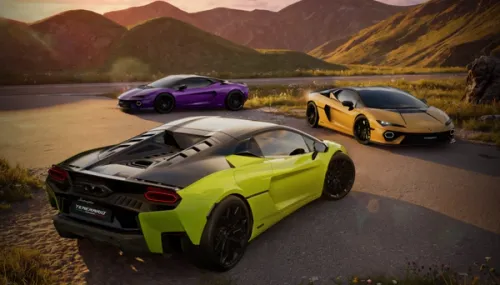
Lamborghini Temerario Tettonero: More Contrast, More Character
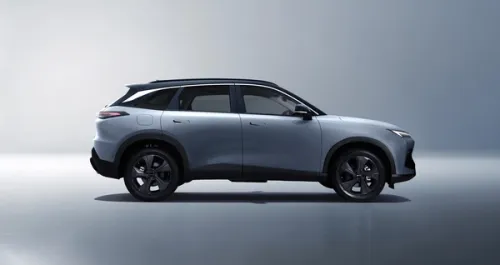
BAIC And Its Premium EV Brand ARCFOX Are Coming To Singapore
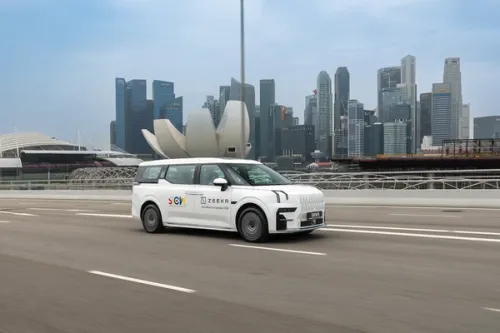
Zeekr 7X And 009 Shuttle Guests At Singapore International Energy Week 2026
get quote bg
Sell your car at the highest price in Singapore
  • pros
    Convenient and Hassle-Free
  • pros
    Consumer Protection
  • pros

    Transparent Process
    With No Obligation

Related Articles
Toyota Corolla Top Of The World With 1.22 Million Sales In 2013
The Toyota Corolla claimed the world’s best seller status in 2013, with internal data confirming 1.22 million recorded sales. It’s evidence of the enduring popularity of a name-plate that has been going strong since 1966, amassing a record 40.72 million cumulative sales by the end of February this year. It’s not just a single car that’s achieved this feat, but a model range that has regularly changed with the times to give customers exactly what they want, right at the heart of the market. The appeal of the latest generation Corolla is proving particularly strong, helping it post a 5% year-on-year increase in sales across 150 countries and regions worldwide.
International News
Toyota to recall 6.39 million cars
Toyota looks to be set to recall 6.39 million cars globally. The announcement, which was made on Wednesday, would see models ranging from the RAV4 to the Yaris get recalled for various faults involving different parts. This is the Japanese company’s second-largest recall. So far, no estimates of cost have been released, and no one knows if the faults are attributed to Toyota’s suppliers, or the way the cars are put together. The whole recall malarkey has been triggered by more stringent scrutiny in America about how quickly an automaker can take preventive safety action and how quickly they share information with regulators and the public.   Toyota’s largest recall was back in 2011, where a total of 9 million vehicles were recalled due to unintended acceleration issues. Market analysis say that the cost of recalls will be less than the cost of fines and legal battles with clients. The recall is preventative, rather than a response to an event, for no one has been killed in the affected vehicles. This should save the automaker months of negative press and court hearings.   The largest batch of vehicles, some 3.5 million,  have faulty cables which may falsely trigger the airbag. The second-largest of the recall, involves some 2.32 million three-door models, manufactured from between January 2005 and August 2010. Cars built in this time may have faults in the seat rails that may lead to the seat sliding forwards in a crash. The rest of the cars have been recalled for faulty steering column brackets, windshield wiper motors and engine starters. Pictures used for illustration purposes only.
International News
Toyota Helps Deliver World-First Copper Recycling Technology
Normal 0 false false false EN-US X-NONE X-NONE MicrosoftInternetExplorer4 /* Style Definitions */ table.MsoNormalTable {mso-style-name:"Table Normal"; mso-tstyle-rowband-size:0; mso-tstyle-colband-size:0; mso-style-noshow:yes; mso-style-priority:99; mso-style-qformat:yes; mso-style-parent:""; mso-padding-alt:0in 5.4pt 0in 5.4pt; mso-para-margin-top:0in; mso-para-margin-right:0in; mso-para-margin-bottom:10.0pt; mso-para-margin-left:0in; line-height:115%; mso-pagination:widow-orphan; font-size:11.0pt; font-family:"Calibri","sans-serif"; mso-ascii-font-family:Calibri; mso-ascii-theme-font:minor-latin; mso-fareast-font-family:"Times New Roman"; mso-fareast-theme-font:minor-fareast; mso-hansi-font-family:Calibri; mso-hansi-theme-font:minor-latin;} Copper is one of the world’s most sought-after metals, yet independent estimates (According to Japan Oil, Gas and Metals National Corporation) suggest that, at current levels, the global mineable supply will be exhausted in around 40 years. Toyota has worked with a group of industry partners to define a world-first system to retrieve and recycle copper from vehicle wiring harnesses, helping secure a valuable new source of the raw material. Copper is in high demand for infrastructure development in emerging markets and is also used in the manufacture of electric motors for hybrid powertrains.
International News